

“Many believe that digitalization means making analog processes digital. But that is not true. Digitalization means rethinking processes in a digital world.”
Christine Regitz
What is production optimization software?
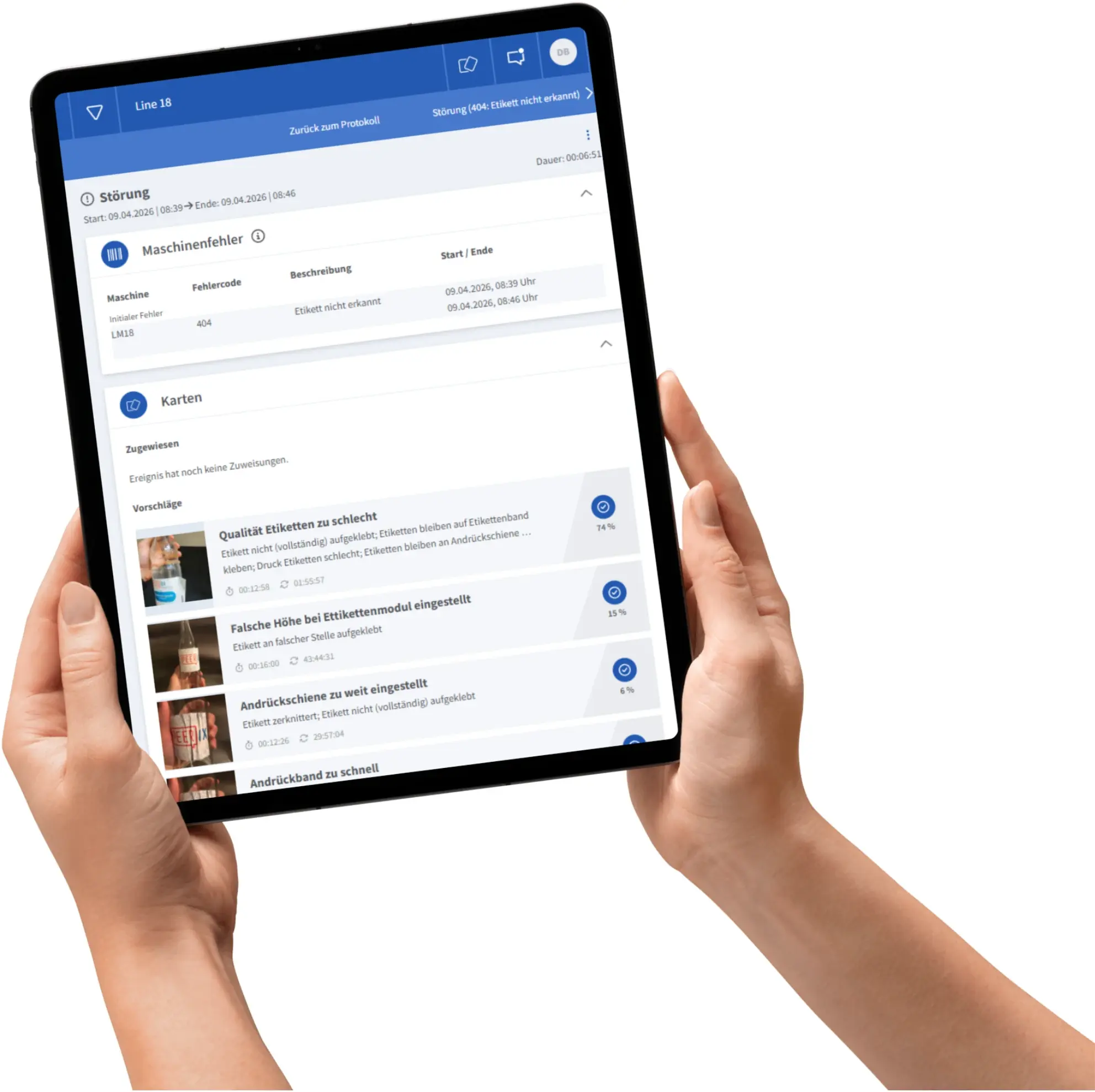
Production optimization software helps companies make manufacturing processes more efficient and productive. It captures data from machines and workflows, analyzes it systematically, identifies weaknesses, and helps ensure consistent product quality. Modern software solutions permeate almost all areas of manufacturing: from production planning and control to Manufacturing Execution Systems (MES), Quality Management Systems (QMS), Maintenance Management Systems (MMS), Warehouse Management Systems (WMS), and Business Intelligence (BI) and analytics tools.
That is the theory. But as well thought-out as these concepts may be, practical implementation is rarely so straightforward. Production facilities often consist of machines from different generations that have grown over many years. Their connectivity follows no standard; instead, it has developed individually from plant to plant. Then there is the human factor: employees bring very different levels of experience, and critical processes often depend on the knowledge of individual people. In this reality, reliably ensuring consistent performance becomes a real challenge.
This is exactly where it becomes clear that the usual approach to production optimization has its limits. Instead of applying ready-made solutions to complex realities, we should first understand how software can truly support these established structures and human factors. Only then do optimization solutions emerge that work not only on paper, but also in practice.
Approach evaluation correctly from the start
The decision to adopt production optimization software is made quickly – but successful implementation is a very different challenge. From our experience, we have learned: the evaluation process must take established structures and individual conditions into account from the outset.
Beyond feature lists: What really matters
The key question is not whether a software solution theoretically offers all the desired features, but whether it works in harmony with your existing machine landscape, your processes, and above all your team. The best software fails if it ignores the way experienced employees work or unnecessarily complicates proven workflows.
People at the center: Software as a tool, not a replacement
Our philosophy is clear: software does not replace people – it empowers them. Production optimization only works sustainably when the software is designed as a tool that extends your employees’ expertise, not bypasses it. The art lies in preparing complex data in a way that enables experienced production staff to make better decisions.
When evaluating, you should therefore check: Does the software support your teams’ day-to-day decisions? Does it make relationships visible that were previously hidden? Good production software makes good employees even better – it does not make them redundant.
The path to the right decision
From our perspective, every evaluation should answer these questions honestly:
- Does the software strengthen your employees’ capabilities, or does it bypass them?
- Can it adapt to your established processes?
- What does step-by-step integration look like in concrete terms?
The best production optimization software is the one that empowers your people and understands your specific challenges. Not the one with the most features, but the one that fits you best.