

The beverage industry is a reflection of the times, where every change raises new questions and reveals challenges that go far beyond the obvious.
Healthy, sustainable, diverse: The new expectations for production
Today, the beverage industry is under enormous market pressure. Consumers not only expect innovative and healthy products, but increasingly also sustainable options that reduce the ecological footprint. This diversification of the product range forces companies to adapt their production flexibly, often within a very short time. At the same time, economic pressure is increasing as the costs of raw materials and energy continue to rise. Labour shortages further exacerbate the situation, as new processes and regulations – such as the European Packaging and Packaging Waste Regulation – require rapid training and implementation on the shop floor.
In addition, consumers are increasingly following trends and are less interested in brand loyalty, which further accelerates product launches. Constantly changing consumer preferences also require even greater flexibility in production. Production lines therefore need to be not only efficient, but also extremely adaptable in order to meet the market’s complex requirements.
From real-world pressure to the momentum of innovation
With every change – whether a new product, a new regulation or higher sustainability requirements – the task of connecting production and knowledge becomes more complex, while efficiency remains essential in the face of rising energy and material costs.
Behind all these developments lie two key questions: How can production be managed so that it remains robust and efficient? And how can knowledge be made available in such a way that new requirements can be adopted quickly, employees can be onboarded rapidly, and processes can be adapted flexibly?
This opens up the opportunity to support processes through the targeted use of technical tools – not as an end in itself, but as a means of consolidating information, facilitating decisions and implementing changes smoothly. In this way, innovation can be understood not as an abstract buzzword, but as a momentum that supports day-to-day work and opens up new opportunities. Between pressure and opportunity, a space emerges where production, the exchange of experience and technical expertise come together.
Paths to greater agility
When a new product is scheduled on the line, regulations change and employees have to learn new procedures, it becomes clear how closely efficiency and knowledge are intertwined.
Since 2015, our founders have been working intensively on the question of how knowledge in production can be used and shared efficiently. They conducted research at the Fraunhofer Institute for Process Engineering and Packaging IVV before the spin-off Peerox took place in 2019, making MADDOX a reality as a concrete solution for knowledge management in production and increasing production efficiency.
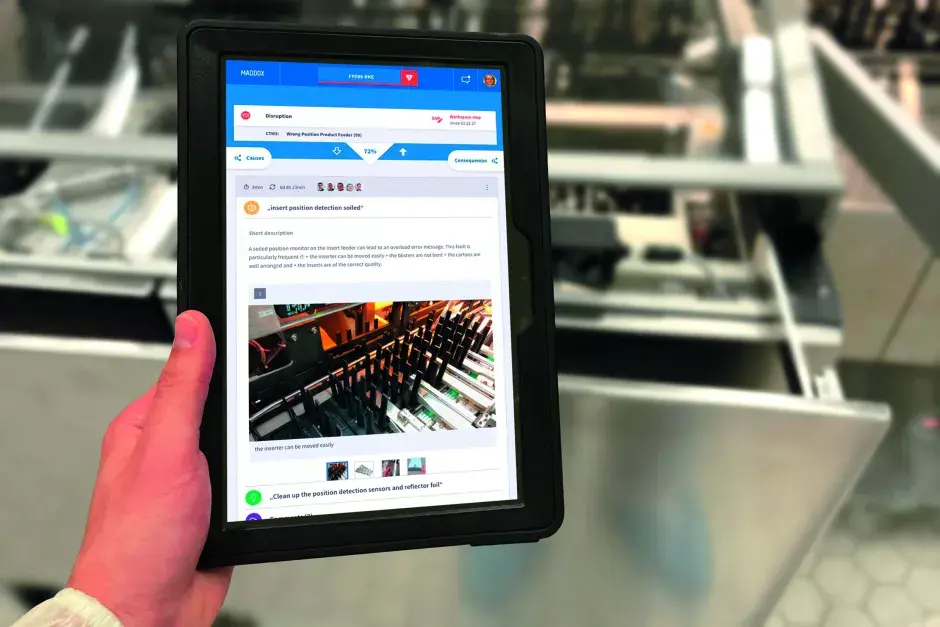
MADDOX solves the problem that even the best-maintained knowledge base is of no use if, due to a lack of experience, you do not know what to look for in a production disruption situation. Specifically, the correct term for, for example, affected machine parts is often unknown or ambiguous, or you find dozens of possible causes for the symptom or error code named in the machine error message.
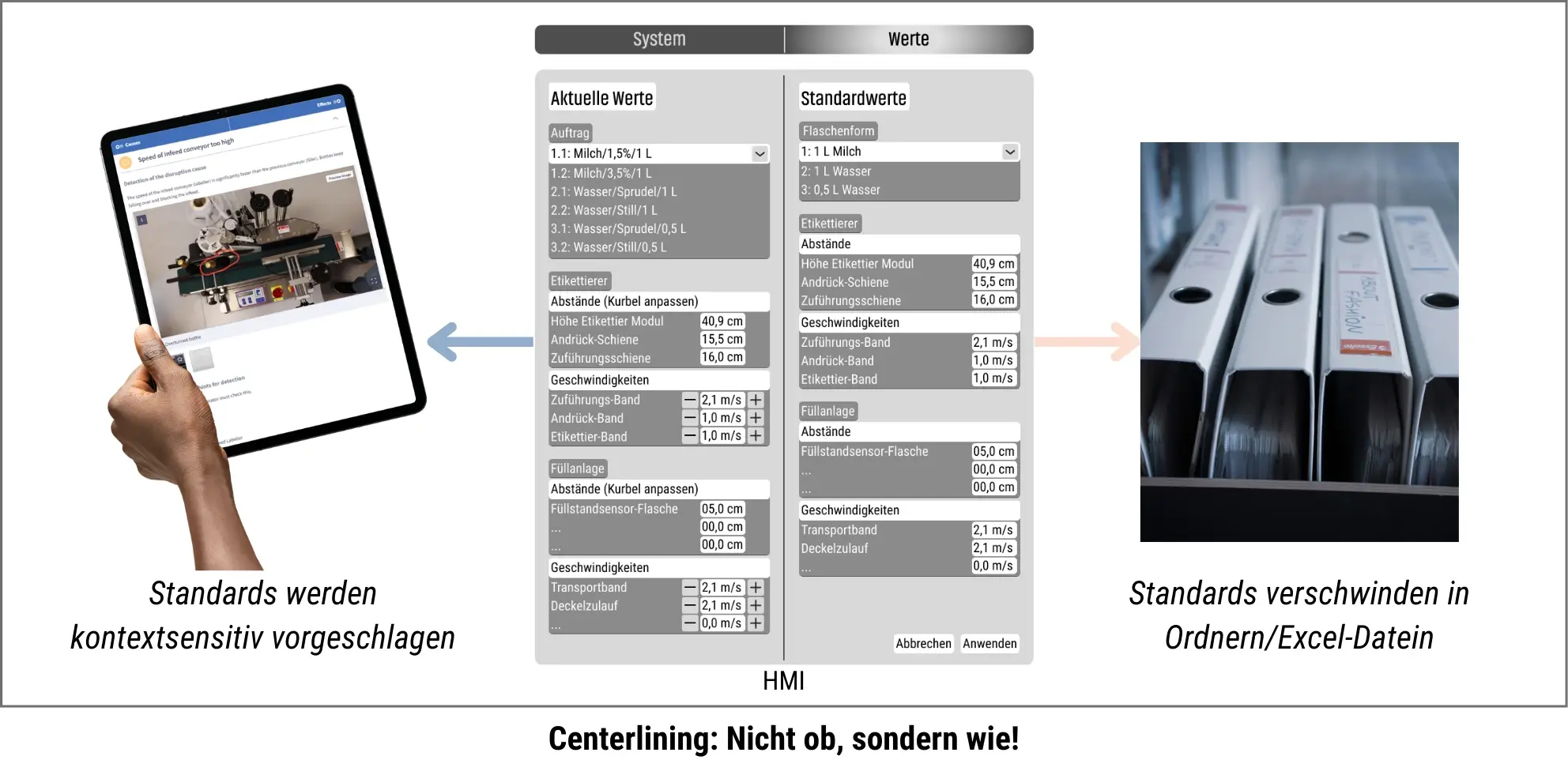
MADDOX’s self-learning, AI-based search algorithm recognises characteristic patterns and correlations in the machine data and automatically provides suggestions for the root cause of the fault and its solution—without any manual searching.
The cooperation with Rotkäppchen-Mumm is an interesting example of how MADDOX can deliver impact in the industry when it comes to linking experiential knowledge.
You can read more about it here .